
Suzuki currently sells 14 bikes and scooters in India, with prices starting at around ₹0.85 lakh for the Access 125 and topping out at just over ₹18 lakh for the Hayabusa – a spread wide enough to cover a first-time commuter and a die-hard performance enthusiast under the same badge. That’s a fair bit to keep track of, especially with Suzuki running naked and faired versions of the same engine across several models, which is exactly where a lot of the confusion around suzuki bikes, a suzuki bikes price list, or the next suzuki bike new model tends to start.
Suzuki Motorcycle India: A Quick Background
Suzuki Motorcycle India Private Limited – SMIL, if you want the short version – is a subsidiary of Suzuki Motor Corporation in Japan. People forget this, but Suzuki wasn’t always flying solo in India. There was a long stretch where it operated as a joint venture with TVS, and it only broke off to run things independently in the early 2000s. Since then the dealer network has crept up past 500 cities, which honestly isn’t a bad spread for a brand that still gets outsold in volume by a couple of domestic giants.
Suzuki’s history with motorcycles goes back further than most people assume. Michio Suzuki didn’t even start out making vehicles – the company began in 1909 as a loom manufacturer in Hamamatsu, Japan. Motorcycles came much later. Once Suzuki did get into them, though, it moved fast: first Japanese brand to win a motocross world title, in 1970, and not long after that came the GS400 and GS750, two bikes that basically put Suzuki on the map as a serious sport-motorcycle builder. That engineering streak hasn’t really gone anywhere. You can still feel it in the Gixxer range today, and you can definitely feel it in the Hayabusa.
How Suzuki Organises Its India Lineup
On its official website, Suzuki groups its Indian two-wheeler range into four categories:
- Scooters – Access, Burgman Street, Burgman Street EX, Avenis
- EV – e-Access
- Motorcycles – Gixxer / Gixxer SF, Gixxer 250 / Gixxer SF 250, V-Strom SX
- Big Bikes – GSX-8R, V-Strom 800DE, Hayabusa
Worth knowing this upfront, because it explains a naming quirk that confuses a lot of buyers. Suzuki basically builds one naked and one faired version of nearly every core platform – Gixxer and Gixxer SF run the same engine, same for the Gixxer 250 and Gixxer SF 250. So the model list looks longer on paper than the number of genuinely distinct machines underneath.
Suzuki Bikes Price List in India
Below is a suzuki bikes price list for everything currently on sale, laid out so you’re not stuck flipping between ten browser tabs trying to compare numbers. These are ex-showroom figures, roughly speaking – the actual suzuki bike price you get quoted will move around a bit depending on your city, the variant you pick, and whatever offer the dealer’s running that week.
| Model | Engine | Power | Kerb Weight | Claimed Mileage | Approx. Ex-showroom Price |
| Access 125 | 124cc, single-cylinder | 8.3 bhp | 106 kg | ~47 kmpl | ₹0.85 lakh |
| Avenis 125 | 124.3cc, single-cylinder | 8.6 bhp | 106 kg | ~50 kmpl | ₹0.93 lakh |
| Burgman Street 125 | 124cc, single-cylinder | 8.3 bhp | 114 kg | ~48 kmpl | ₹1.06 lakh |
| Burgman Street EX | 124cc, single-cylinder | 8.5 bhp | 111 kg | ~50 kmpl | ₹1.15 lakh |
| e-Access | Electric motor | – | 122 kg | ~95 km range | ₹1.91 lakh |
| Gixxer | 155cc, single-cylinder | 13.4 bhp | 141 kg | ~45 kmpl | ₹1.29 lakh |
| Gixxer SF | 155cc, single-cylinder | 13.4 bhp | 148 kg | ~45 kmpl | ₹1.43 lakh |
| Gixxer 250 | 249cc, single-cylinder | 26.1 bhp | 156 kg | ~35 kmpl | ₹1.85 lakh |
| Gixxer SF 250 | 249cc, single-cylinder | 26.1 bhp | 161 kg | ~36 kmpl | ₹1.95 lakh |
| Gixxer SF 250 Flex Fuel | 249cc, single-cylinder | 26.1 bhp | 161 kg | Varies with ethanol blend | ₹2.01 lakh |
| V-Strom SX | 249cc, single-cylinder | 26.1 bhp | 167 kg | ~37 kmpl | ₹2.03 lakh |
| GSX-8R | 776cc, parallel-twin | 81.8 bhp | 205 kg | – | ₹9.89 lakh |
| V-Strom 800DE | 776cc, parallel-twin | 83 bhp | 232 kg | – | ₹11.02 lakh |
| Hayabusa | 1340cc, inline-four | 190 bhp | 266 kg | ~17 kmpl | ₹18.07 lakh |
On one end you’ve got the Access 125, the cheapest thing wearing a Suzuki badge in India. On the other, the Hayabusa sits so far above everything else on the suzuki bike price chart that comparing the two almost feels unfair.
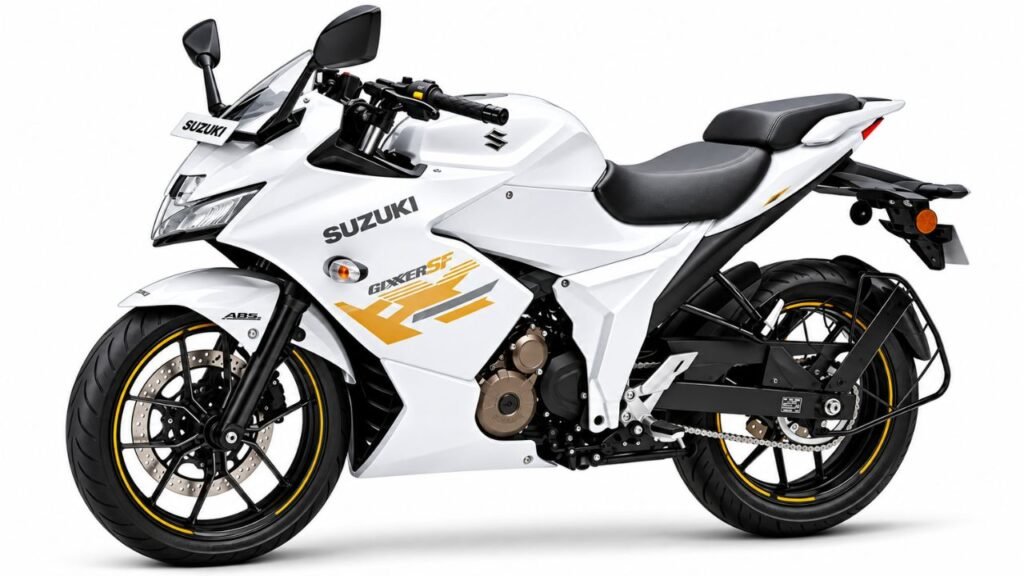
Forget the individual numbers for a second – engine size is really what’s drawing the line between these tiers. The 125cc scooters exist to sip fuel and keep running costs down, nothing more complicated than that. Move up to 155cc and 250cc and you’re paying a bit more for everyday usability with some actual excitement thrown in. Then there’s the 776cc and 1340cc end of things, which is really just for people who want performance and have already made peace with what that costs in fuel, insurance, and servicing.
Suzuki 125cc Scooters: The Volume Segment
If you’re curious where Suzuki actually makes its money in this country, it’s right here. The suzuki bikes 125cc scooter range is what keeps the lights on – these are the bikes ordinary commuters actually need, not the ones people dream about. Look closely at suzuki bikes 125cc pricing and you’ll notice the Access, Avenis, and Burgman Street all sit within a few thousand rupees of each other; the real differences show up in styling and small features, not in what’s under the hood.
Access 125
The Access 125 has more or less carried Suzuki’s scooter business for years, and Suzuki keeps it from feeling stale with small but genuinely useful updates instead of letting it coast. Newer units get Bluetooth connectivity, an external fuel flap so you’re not lifting the seat every fill-up, a wide flat floorboard for actual leg room, and a fuel-injected engine that stays smooth even crawling through traffic. Owners tend to bring up the same three things: comfortable ride, refined engine, and mileage numbers you can actually plan a budget around.
Avenis 125
Under the skin, the Avenis is basically an Access. What’s different is everything visible – sharper, more angular bodywork clearly aimed at a younger crowd, a fully digital cluster instead of the Access’s more basic display, and ergonomics tweaked just enough to feel sportier without giving up the practicality that makes the platform work in the first place.
Burgman Street and Burgman Street EX
The Burgman Street takes the maxi-scooter idea and squeezes it into a 125cc frame – bigger windscreen, wider floorboard, a stance that just looks more substantial parked next to an Access or Avenis. The EX version sits a notch above with a few extra features and slightly different trim. It’s also earned a real fanbase; Suzuki even runs “Burgman Hangout” rides where owners get together and ride as a pack, which says something about how attached people get to this scooter.
e-Access
The e-Access is the first official attempt by Suzuki on the market in the segment of electric motorcycles. This scooter is a modified version of the popular Access model. The brand decided to make e-Access to attract those customers who appreciate electric mobility but are not ready to give up motorcycles. The changes that engineers made to the e-Access allowed keeping the familiar look and providing the driver with an opportunity to enter the world of electric transport. The range of the scooter on a full battery charge is about 95 km.
Suzuki Gixxer Series: Backbone of Motorcycle Range
Ask any dealer of Suzuki dealership about the bikes that they sell and there is a pretty good chance that they will mention one with a Gixxer badge on it, in some form. The bike was launched in 2015 and set the template for what a sporty 150cc commuter should be in India, it seems. The company has been building upon the same formula ever since.
Gixxer and Gixxer SF
The standard Gixxer is a naked streetfighter, a muscular tank with creased lines and a 155cc single-cylinder engine that’s been tweaked to deliver a healthy low-rpm punch without falling off the curve at higher revs. The Gixxer SF is the same engine, buried under full fairings for a more aggressive, track-tuned look. Riders of both models report similar strengths: a smooth power delivery from the motor and a willingness to hustle on the highway, without robbing the rider’s legs of their energy during slow, stop-and-go traffic.
Gixxer 250 and Gixxer SF 250
Eventually Suzuki stretched the Gixxer name onto a 250cc platform, chasing India’s quarter-litre boom. Naked Gixxer 250, faired Gixxer SF 250 – both get a bigger single-cylinder engine, stiffer suspension, and stronger brakes to earn their step up from the 150s. There’s also a flex-fuel SF 250, badged FFV, built to run on higher ethanol blends. That wasn’t a simple relabelling job either – Suzuki had to change the fuel delivery hardware and rework the electronics just to handle that fuel chemistry without issues.
Suzuki mostly leaves the big mechanical changes alone and instead refreshes the whole Gixxer family through new colours and graphics from year to year. It’s a cheap way of keeping things looking current without making existing owners feel like their bike suddenly went out of style overnight.
| Gixxer Variant | Engine | Fairing | Typical Buyer |
| Gixxer | 155cc | No | Daily commuters wanting sporty styling |
| Gixxer SF | 155cc | Yes | Riders wanting an aggressive, faired look |
| Gixxer 250 | 249cc | No | Riders stepping up from 150cc machines |
| Gixxer SF 250 | 249cc | Yes | Enthusiasts wanting more power with daily usability |
| Gixxer SF 250 Flex Fuel | 249cc | Yes | Riders in regions with higher ethanol-blended fuel |
Suzuki Technology Features Across the Range
Suzuki throws around a handful of branded technologies across its India lineup, and it’s worth knowing what these actually mean rather than just nodding along at a showroom.
- Ride Connect is the smartphone connectivity system – navigation, call and message alerts, trip data, all piped onto the instrument cluster on select models.
- SEP (Suzuki Eco Performance) is just Suzuki’s name for its fuel-efficiency engine tuning, used across most of the 125cc and 155cc engines.
- E-Technology covers the electric drivetrain bits in the e-Access – how the battery’s managed, how the motor’s tuned for the long haul.
- SOCS (Suzuki Original Cooling System) keeps engine temperatures under control, which matters most on bikes stuck in stop-and-go city traffic all day.
None of this is exactly revolutionary – other brands offer similar stuff somewhere in their own ranges. What Suzuki does a bit differently is spread these features fairly evenly across the lineup, which is part of why even something as basic as the Access 125 doesn’t feel cheap next to rivals at a similar price point.
Safety Features on Suzuki Bikes
Braking hardware isn’t the same across every model, so it’s worth double-checking rather than assuming every Suzuki gets identical kit.
| Model Range | Braking Setup | Additional Safety Features |
| Access 125 / Avenis / Burgman Street | Drum or disc-front variants, with CBS (Combi Brake System) | Wide floorboard for stability, telescopic front suspension |
| Gixxer / Gixxer SF | Single-channel or dual-channel ABS depending on variant | Petal disc brakes front and rear on higher trims |
| Gixxer 250 / Gixxer SF 250 / V-Strom SX | Dual-channel ABS as standard | Larger disc diameters, mono-shock rear suspension |
| GSX-8R / V-Strom 800DE | Dual-channel ABS with cornering support | Multiple riding modes, traction control on select trims |
| Hayabusa | Dual-channel ABS with advanced electronics | Cornering ABS, multiple ride modes, launch control |
Roughly speaking, dual-channel ABS becomes standard once you’re at 250cc or above, while the 125cc scooters mostly stick with CBS, with a disc-brake front option available if you’re willing to pay a bit more.
Suzuki Adventure Motorcycles: V-Strom SX and V-Strom 800DE
The V-Strom badge carries real weight overseas, and Suzuki’s brought two very different takes on it to India – polar opposites on price.
V-Strom SX
The V-Strom SX borrows its 250cc engine straight from the Gixxer 250 family, but the character is entirely different – taller stance, longer-travel suspension, a beak-style fender and raised windscreen that all scream adventure-bike. It’s meant for someone who wants a single machine that handles the daily commute, the odd highway stretch, and some light trail riding, minus the cost and bulk of a proper big-bore ADV. Real owners report mileage bouncing anywhere from about 28 to 37 kmpl, which really just comes down to riding style and fuel type.
V-Strom 800DE
The V-Strom 800DE is a different animal altogether, built around the same 776cc parallel-twin found in the GSX-8R. This one’s for people who actually mean it when they say adventure touring – real off-road ability, comfort over long distances, modern electronics – and it competes directly with other mid-weight ADVs sold in India.
Suzuki Big Bikes: GSX-8R and Hayabusa
At the top sit two machines built for enthusiasts, not people just trying to get to work.
GSX-8R
The GSX-8R shares its 776cc parallel-twin with the V-Strom 800DE, just dressed up in full sports-bike bodywork instead. Colour TFT display, a few riding modes, a chassis tuned sharper than its ADV sibling – a fair jumping-off point for anyone stepping up from a 250cc or 300cc bike into something with real muscle.
Hayabusa
Built around a 1340cc inline-four, it’s held cult status in India for years, helped along by more than a few Bollywood cameos. Suzuki doesn’t touch the core mechanicals much anymore, but it keeps the bike relevant with the occasional new colour or special edition. At over ₹18 lakh ex-showroom, it’s the most expensive thing in Suzuki’s entire suzuki all bikes catalogue by a wide margin, and owners bring up the exact same two things every time: how planted it feels at high speed, and how much attention it draws just sitting parked. Scroll through any list of suzuki all bikes on sale in India and the Hayabusa will always top it on price, with nothing else even close.
What Suzuki Bike Owners Are Actually Saying
Spec sheets only tell half the story. Here’s what real owners actually report after living with these bikes for a while.
- Access 125 owners frequently highlight smooth engine performance, comfortable seating, and dependable mileage for daily commuting, with many describing the ride quality as well balanced for city traffic.
- Gixxer SF owners often point to strong engine refinement, stable highway handling, and comfortable ergonomics even after extended riding, with very few reporting noticeable vibrations at higher speeds.
- V-Strom SX owners report mileage anywhere between roughly 28 and 37 kmpl depending on riding style, fuel type, and how much city traffic they encounter, with highway cruising in higher gears generally returning the best numbers.
- Burgman Street owners have occasionally flagged concerns around component rusting and part replacement costs on older units, a useful reminder to inspect wear parts closely on any used listing.
- Hayabusa owners consistently mention stability at high speed, strong reliability, and a level of road presence that draws attention wherever the bike goes, alongside manageable running costs relative to its performance class.
Take all of this with a pinch of salt, obviously – how a bike performs depends a lot on who’s riding it and how well it’s been looked after. Still, it’s a decent gut-check against whatever’s printed on the spec sheet.
Colours, Variants, and Special Editions
More often than not, when Suzuki “updates” a model, what actually changed is the paint job, not the engineering underneath. A few things worth flagging:
- The Gixxer family (Gixxer, Gixxer SF, Gixxer 250, Gixxer SF 250, and the Flex Fuel SF 250) regularly receives updated colourways and graphics packages.
- The Access 125 is available in multiple trims, including a Bluetooth-enabled variant with connected features.
- The Burgman Street range includes both the standard Burgman Street and the higher Burgman Street EX trim, which adds extra features over the base model.
- The Hayabusa occasionally receives limited special editions with unique paint schemes, aimed at collectors and long-time brand enthusiasts.
- Suzuki has also run co-branded editions in the past, such as special graphics packages tied to popular entertainment franchises, aimed at younger buyers of the Avenis and similar models.
If resale value is on your mind at all, these limited colour runs tend to hold their price a little better simply because fewer of them ever existed in the first place.
Discontinued and Legacy Suzuki Models
Suzuki’s India catalogue has plenty of motorcycles that disappeared from showrooms years ago but still come up whenever older riders start swapping stories. The Samurai, Shogun, and Shaolin from the TVS-Suzuki days. More recent exits like the Intruder 150, the GS150R, older-generation Hayabusas, and earlier Gixxer SF versions. Nothing dramatic behind most of these – tighter emission rules, buyer tastes moving on, or a newer model simply taking over the same spot in the lineup.
Suzuki New Model Launches and Upcoming Bikes
Don’t hold your breath expecting a brand-new Suzuki every couple of months – that’s just not how this brand works. If you’re tracking a suzuki new bike, or waiting on whatever the next suzuki bike new model turns out to be, expect small, steady moves rather than anything dramatic:
- Fresh colour options across the Gixxer, Gixxer SF, Gixxer 250, and Gixxer SF 250 range
- Continued availability of the flex-fuel-compatible Gixxer SF 250 FFV
- New colourways and a special edition for the Hayabusa, alongside the GSX-R600 and GSX-R750 supersports sold in limited numbers
- An upcoming GSX-8S naked motorcycle, expected to share its engine with the GSX-8R
- A rumoured Burgman Street Electric scooter, which would sit alongside the e-Access in Suzuki’s electric range
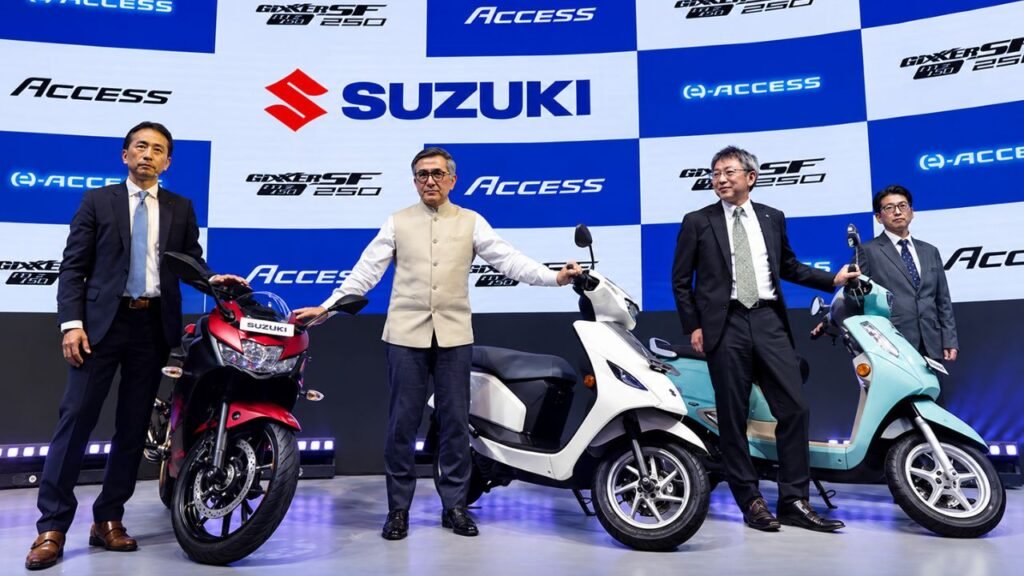
When a genuinely new suzuki new bike does eventually arrive, chances are it lands in the Big Bikes category rather than replacing an existing 125cc or 250cc model outright. Worth checking Suzuki’s official website or a nearby dealership as any launch date gets closer, since pricing for a suzuki bike new model usually only gets locked down in the last few weeks before it actually hits showroom floors.
Suzuki vs Rival Brands: A Quick Comparison
Suzuki isn’t playing this game alone – it’s up against several well-established two-wheeler brands, each bringing something different depending on the segment.
| Factor | Suzuki | What Rivals Often Offer Instead |
| Engine refinement | Smooth, well-tuned engines across the range | Varies significantly by brand and price point |
| Styling | Sporty, distinctive design language, especially on the Gixxer family | Some rivals offer more design variety within a single segment |
| Segment focus | A compact, curated range | Larger brands often field many more models per segment |
| Resale value | Reasonably steady, particularly for Gixxer models | Depends heavily on brand reputation and model popularity |
| Dealer network reach | Present in 500-plus cities, though thinner in some rural pockets | Larger domestic brands generally have wider rural coverage |
If there’s one thing that actually sets Suzuki apart, it’s not variety – it’s how carefully engineered each model feels, especially in the Gixxer line and right up at the Hayabusa. People shopping the Access 125 almost always end up cross-checking it against the Honda Activa 125, and Gixxer SF buyers usually weigh it against other 150cc sports commuters from rival Japanese and domestic names before they actually commit.
How to Choose the Right Suzuki Bike
Be honest with yourself about how you’ll actually use the thing, and the shortlist basically writes itself.
For daily city commuting:
- Access 125 or Avenis 125 for straightforward, low-maintenance scooter ownership
- Gixxer for buyers who want a proper motorcycle with sporty looks
For a sporty riding experience on a reasonable budget:
- Gixxer SF for full fairing and sharper looks without a big jump in running costs
- Gixxer 250 or Gixxer SF 250 for buyers ready to step up in performance
For long rides and mixed terrain:
- V-Strom SX for a comfortable, adventure-styled 250cc option
- V-Strom 800DE for serious touring and light off-roading with a bigger engine
For dedicated performance enthusiasts:
- GSX-8R for modern electronics and twin-cylinder performance at a more attainable price than the flagship
- Hayabusa for the full, uncompromised superbike experience
Cost of Ownership: What to Budget Beyond the Sticker Price
That ex-showroom suzuki bike price everyone quotes is really just the entry fee, not the full bill. Living with any of these bikes long-term also means setting money aside for:
- Insurance premiums, which rise with engine displacement and the add-on cover selected.
- Registration and road tax, set by individual state governments and generally higher on bigger-displacement bikes.
- Periodic servicing, including oil changes, brake pad replacement, and chain maintenance, with costs scaling up sharply for models like the Hayabusa.
- Fuel costs, lowest on the 125cc scooters and highest on the Hayabusa given its performance-focused tuning.
- Riding gear and accessories, such as helmets, gloves, and protective add-ons, which matter more as engine size and speed potential increase.
Owners back this up in practice, honestly. Plenty of Access 125 and Gixxer SF riders say they’re genuinely happy with what it costs to keep these bikes running day to day, while a handful of Burgman Street owners have flagged component wear and part costs after a few years – which really just means: plan for maintenance, don’t just fixate on the number on the price tag.
Financing a Suzuki Bike
Most Suzuki dealerships have arrangements with banks and NBFCs, so getting a loan on nearly any model in the range isn’t hard.
- Down payment typically ranges between 10% and 30% of the on-road price, depending on the lender and the buyer’s credit profile.
- Loan tenure commonly runs from 12 to 48 months.
- Interest rates vary by lender and ongoing scheme, so comparing at least two or three offers before committing is worth the extra effort.
- Exchange bonuses are often available for buyers trading in an older two-wheeler against a new Suzuki purchase.
Where to Buy: Showrooms, Test Rides, and Bookings
Suzuki dealerships are spread across most major Indian cities, with the heaviest concentration in Bengaluru, Delhi, Mumbai, Hyderabad, and Chennai. You can book a test ride or even reserve a model online through Suzuki’s official site before setting foot in a showroom – a decent way to check what’s actually in stock and whether any offers are live before you show up. It also helps catch state-specific tax or registration quirks early, so the suzuki bikes price you saw on some website doesn’t turn into a nasty surprise at the dealership counter.
Quite a few Suzuki showrooms also run a pre-owned vehicle programme, worth a look if a brand-new purchase feels like too much of a stretch right now. This route sometimes turns up genuine savings on things like the Gixxer SF 250 or V-Strom SX, especially if you don’t mind a bike that’s already covered some distance under its first owner. Dealers usually inspect these before listing them and throw in some form of limited warranty, though exactly what that covers varies from one showroom to the next.
Spare Parts and Service Costs
Service costs generally scale with engine size – the 125cc scooters are the cheapest to keep running, and the Hayabusa sits comfortably at the other extreme. Suzuki’s revised its spare parts price list a few times following GST changes, and the updated sheets sit on the brand’s official website if you want exact figures before budgeting for a visit. Roughly speaking, entry-level scooter servicing stays within a few hundred rupees per visit for routine work, the Gixxer and V-Strom SX run a bit higher thanks to bigger engines and more componentry, and Hayabusa servicing climbs into the thousands once you factor in a complex four-cylinder engine and genuinely premium parts.
Read Also: Maruti Suzuki Baleno Facelift | Upcoming Car Launches in September
Frequently Asked Questions
Is a Maruti Suzuki bike the same as a Suzuki motorcycle?
No, Maruti Suzuki only sells cars; Suzuki Motorcycle India handles all two-wheelers
Which is the cheapest Suzuki bike in India?
The Access 125 scooter, and the Gixxer among proper motorcycles.
Which Suzuki bike gives the best mileage?
The Access 125 and Avenis lead among scooters, while the Gixxer and Gixxer SF top the motorcycle range.
Are any 250cc Suzuki bikes sold in India?
Yes, the Gixxer 250, Gixxer SF 250, and V-Strom SX all share Suzuki’s 250cc engine platform.
Is the Hayabusa road-legal in India?
Yes, it is sold through Suzuki’s authorised dealerships with full warranty and service backing.
Does Suzuki sell electric two-wheelers in India?
Yes, the e-Access is currently Suzuki’s only electric model, with a Burgman Street Electric rumoured to follow.
How often should a Suzuki bike be serviced?
Intervals vary by model, but most need a first service soon after purchase and then periodic servicing every few thousand kilometres, as listed in the owner’s manual.
Can Suzuki bikes be booked online before visiting a showroom?
Yes, Suzuki’s official website allows online booking and test-ride scheduling for most current models.
Does Suzuki offer a warranty on its motorcycles?
Yes, standard warranty coverage is included with every new purchase, with extended warranty options available at most dealerships.
Source: Suzuki Motorcycle India



Leave a Reply